Selecting appropriate fixture types is a practical decision that intersects electrical planning, interior design, and the functional requirements of each space. In apartment contexts, the available ceiling infrastructure, rental restrictions, and budget generally determine which fixture categories are viable. This article covers the main categories encountered in contemporary Polish apartment interiors, with notes on their installation requirements and typical applications.

Ceiling-Mounted Fixtures
Flush and Semi-Flush Mounts
Surface-mounted ceiling fixtures connect directly to an existing outlet box and require no structural modification beyond what is already present. They are the most practical option in apartments where ceiling height is limited (below 2.6 m) or where the lease does not permit structural alterations. Flush mounts sit flat against the ceiling; semi-flush versions hang 15–30 cm below it, allowing downward light to spread more widely.
In the Polish market, flush LED ceiling panels are sold widely through chains such as Castorama, Leroy Merlin, and OBI, as well as specialist lighting retailers in major cities. Panel-style fixtures with integrated LED modules (non-replaceable) are common in the lower price range; fixtures accepting replaceable GU10 or E27 lamps provide longer-term serviceability.
Pendant Lights
Pendants hang from the ceiling on a cord, cable, or rod and direct light downward. They are used primarily as zone anchors over dining tables and kitchen islands, as described in more detail in the lighting zones article. A single pendant over a dining table with a shade diameter of 40–60 cm is a common configuration in Polish apartments of 50–80 m².
Multi-pendant arrangements — three or five small pendants grouped over a table — have become popular in new-build apartment interior design, particularly in developments marketed to younger buyers in cities like Gdańsk, Poznań, and Łódź.
Track Lighting
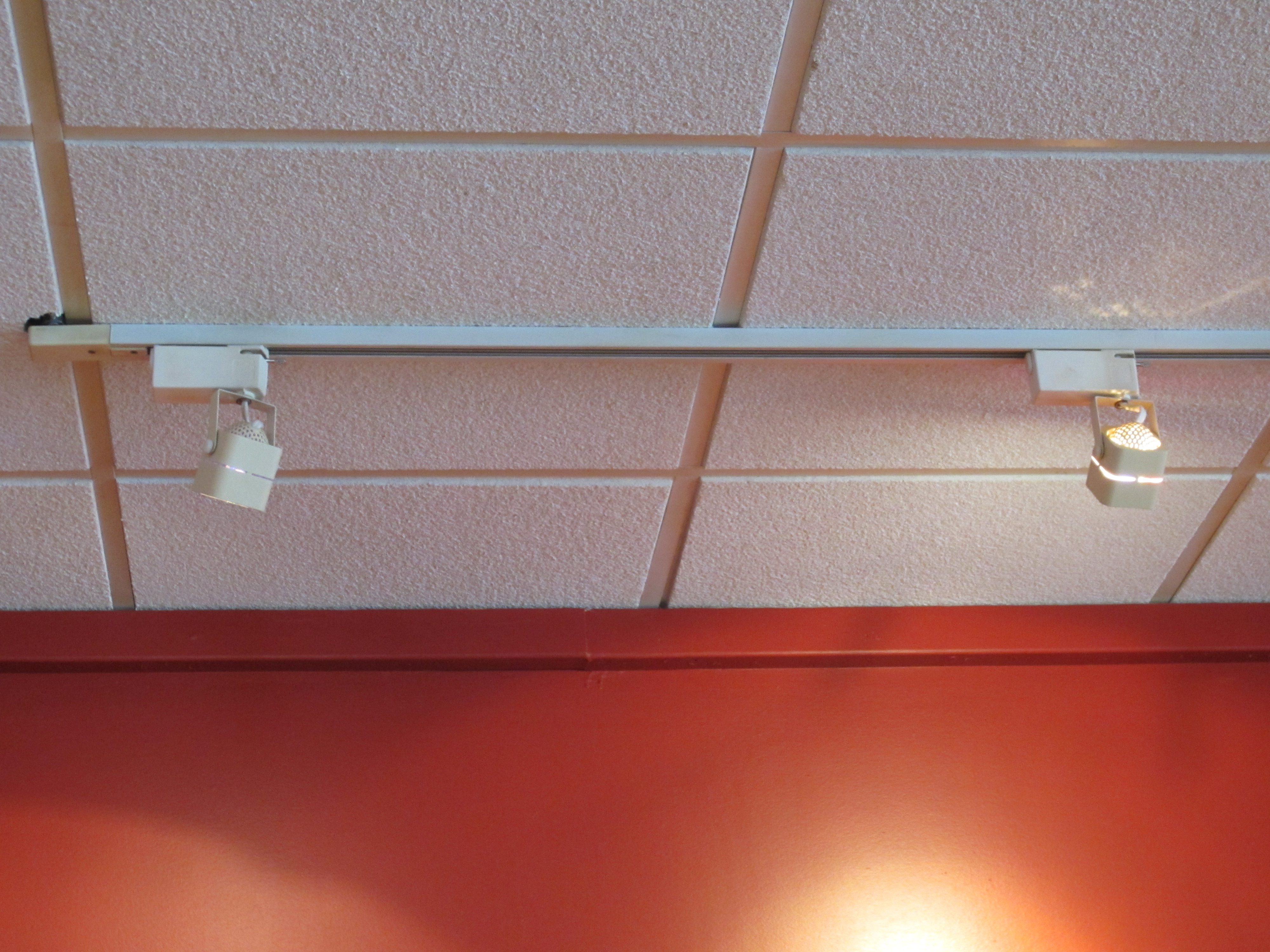
Track systems consist of an electrified rail fixed to the ceiling, onto which individual spotlight heads can be mounted and repositioned. A single electrical connection powers the entire track, making them efficient to install where multiple light points are needed. Track lighting is common in apartments used partially as home offices or studios, where the lighting layout may need to change as the space is reconfigured.
Standard track systems in Europe operate on 230V; low-voltage 48V magnetic track systems have become more widely available since around 2020, offering a slimmer rail profile and a broader range of compatible accessories including diffuse panels, linear modules, and adjustable spotlights. Several Polish importers stock magnetic track systems from manufacturers including Arkoslight and Molto Luce, though availability outside major urban centres is limited.
Recessed Downlights
Recessed fixtures install into a ceiling void, with only the trim ring visible from below. They provide a clean aesthetic and are the standard approach in renovations where suspended or plasterboard ceilings are being installed. In apartment buildings with reinforced concrete ceiling slabs — typical of both panel construction and newer concrete-frame buildings — recessed fixtures require a false ceiling layer to create the void.
Building regulations in Poland (Prawo budowlane) require that electrical installations affecting structural elements be carried out by a qualified electrician (elektryk z uprawnieniami). This applies to routing cable through ceiling slabs, which is typically done during the main renovation phase before surfaces are finished.
GU10 socket recessed fixtures use replaceable LED lamps, which simplifies maintenance. Fixtures with integrated LED modules are more common in the mid-range market; these are more efficient but require full fixture replacement when the LED array fails.
Wall-Mounted Fixtures
Wall Sconces

Wall sconces mount directly to the wall and provide ambient or accent light at mid-height. They are frequently used in bedrooms — positioned flanking the headboard at a height of 140–160 cm — and in hallways where ceiling access is limited or floor space is too narrow for portable lamps. In Poland, sconces on junction boxes (puszka elektryczna) require an existing wall outlet at the installation point; surface-conduit installations are an option but visually less clean.
Picture Lights and Directional Wall Spots
These fixtures direct a narrow beam at a specific wall surface — artwork, a bookshelf, or a decorative panel. They are typically plug-in rather than hardwired, which makes them practical for apartments where the tenant cannot alter electrical infrastructure.
Portable Fixtures
Floor Lamps
Floor lamps connect to standard wall outlets and require no installation. They are among the most flexible fixtures in an apartment context: they can be repositioned, taken when moving, and replaced without involving an electrician. Arc floor lamps — with a long horizontal arm extending over seating — have been common in contemporary Polish interior photography since roughly 2018 and are available at most furniture retailers including IKEA, Black Red White, and Agata.
Table Lamps

Table lamps sit on surfaces — nightstands, desks, sideboards — and provide localised illumination. At bedside, a table lamp with a shade that directs light downward is preferable to an upward-casting model, to avoid light spillage onto a sleeping partner. For desk use, lamps with an adjustable arm allow the light source to be positioned close to the work surface.
Specialised Fixtures
Under-Cabinet Lighting
LED strip lights or puck lamps mounted beneath upper kitchen cabinets direct light onto the worktop below. This is classified as task lighting and is one of the higher-impact retrofits available in Polish kitchen renovations, as standard apartment kitchens are rarely designed with adequate worktop illumination from ceiling fixtures alone. LED strip reels with a neutral white (3500–4000K) output and a CRI of 90+ are recommended for kitchen applications.
Ceiling Lamp

Traditional ceiling lamps — a central fixture with a diffuser — remain the most common single-fixture solution in Polish residential interiors. They provide even ambient illumination but little directional control or zoning capability. When used alone, they tend to produce flat, shadowless lighting that is functional but not atmospherically varied. Pairing a central ceiling lamp with at least one secondary portable source significantly expands the range of lighting conditions achievable without electrical modifications.
Fixture Selection Criteria
| Criterion | Consideration |
|---|---|
| IP rating | IP44 minimum for bathroom and kitchen splash zones; IP65 for shower areas |
| Lamp type | Replaceable GU10 or E27 preferred for longevity; integrated LEDs more compact |
| CRI | CRI 80+ for general areas; CRI 90+ for bathrooms, kitchens, artwork |
| Dimmer compatibility | Check LED driver compatibility with the intended dimmer type before purchasing |
| Ceiling weight load | Heavier fixtures (chandeliers above 5 kg) require attachment to a structural anchor, not just the outlet box |
Information on luminaire standards and IP ratings is available through IES and via EU product regulation documentation published on the European Commission website.